
The art of being
- Sports & Lifestyle
- Jan 28
- 2 min read

Updated: 5 days ago
Photos: Dómmina Art, Óscar Barba & Mariana Castañón

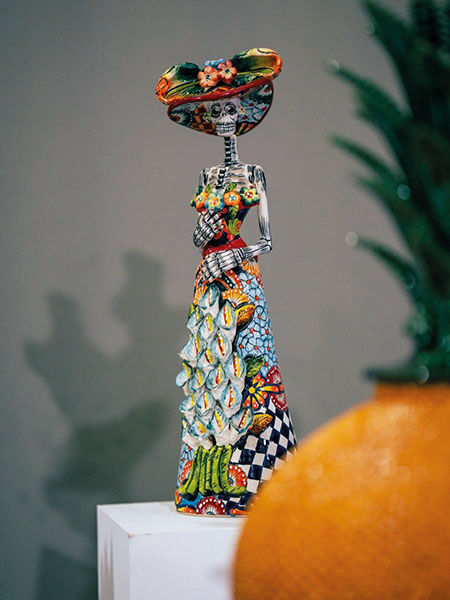
In late November, Dommina Mexican Art, located in Las Rozas on the outskirts of Madrid, opened its doors and has since established itself as one of the most expansive spaces dedicated to Mexican art in Europe. More than one thousand works shape a journey that ranges from monumental sculpture to collectible ceramics, chess sets rising over two metres in height, and pieces created for discerning collectors.

Within this context, Sports & Lifestyle conducts an exclusive interview with Martha Cea, founder of the project, who defines the space with a phrase that encapsulates her vision: “What we seek is to change the perception of Mexican folk art and elevate it to an elite level, highlighting the work of master artisans without losing its essence.”
Martha describes herself as Cora, was born in Pericos, Nayarit. Her connection to the Indigenous cultures of western Mexico is part of a living heritage that informs her understanding of art, curatorship and international projection.
Her first project was born there four years ago under the name MagicMex, initially as a hobby within a space that brought together furniture, decorative objects and Mexican folk art. Growth followed naturally, driven by an audience that responded to the authenticity of the pieces. That process led to the creation of a more defined brand with a broader cultural ambition. Dommina emerged in 2023, with a clear focus on high-end works carrying strong symbolic meaning.

Wixárika art is the luxury of authenticity
One of the project’s central pillars is Wixárika art, a term Martha uses with precision and conviction. “It’s important to clarify that it is not Huichol art,” she states. The word Huichol, widely used, is considered incorrect by the communities themselves, as it means “the one who flees.” Wixárika, by contrast, is the name by which this people identify themselves, meaning “a person with a deep heart who loves knowledge.” The plural, Wixáritari, refers to a culture whose worldview remains vibrantly alive today.

This art is primarily expressed through nierikas or beadwork—tiny glass beads pressed by hand onto beeswax, known as Campeche wax. This ancestral technique creates symbolic surfaces that function as windows into spiritual vision. Peyote, corn and the deer form a spiritual triad that translates visually into an art form that is vibrant, precise and deeply meaningful.

At Dommina, these traditional techniques enter into dialogue with materials associated with contemporary luxury. Bronze sculptures with gold plating, interventions using Swarovski crystals and monumental compositions reinterpret artisanal mastery without stripping it of its spiritual essence. A bronze falcon encrusted with Swarovski crystals, a three-metre-tall jaguar, and commanding sculptural xoloitzcuintles form part of a body of work that proposes a new aesthetic reading. The aim is not to transform the art, but to place it within a different context.

Click here and join to our readers


Comments